

BPC-157
Independently verified purity
>99.80%
Chromatographic purity, >99.80% ± 0.18%
Measured by HPLC-UV/VIS at Vanguard Laboratory on the exact batch we ship you, not a representative sample from a previous lot.
Vanguard Laboratory is accredited to ISO/IEC 17025:2017 by A2LA under certificate scope 6377.01. The chromatographic purity result shown is not represented as an accredited-scope test. The laboratory did not observe sample selection and cannot confirm the sample is representative of the whole lot.
Certificate of Analysis
Every batch is tested by reverse-phase HPLC at Vanguard Laboratory against a 99+% purity acceptance threshold before it is listed. The certificate is batch-matched to the vial label and published in our COA library, so you can read it before you order rather than asking for it.
Vanguard is accredited to ISO/IEC 17025:2017 by A2LA under certificate scope 6377.01. The chromatographic purity result is not represented as an accredited-scope test.
Shipping & delivery
Order by 2pm Mon-Fri for same-day dispatch. Sent with Royal Mail Tracked 24, which aims for the next working day. Vacuum-sealed, discreet packaging. £3.99 under £60, free over £60 after any discount.
Free delivery protection is included on every order. If your parcel is lost in transit or a vial arrives damaged, we replace it at no cost. See shipping and delivery.
Storage & handling
Lyophilised peptides ship vacuum-sealed. Refrigerate (2-8°C) on arrival for short-term storage, freeze (-20°C) for long-term.
Research use only
Supplied exclusively for laboratory and research purposes. Not authorised for human or veterinary use.
BPC-157 is a synthetic 15-residue peptide, sequence GEPPPGKPADDAGLV, supplied by Alphex as a lyophilised powder in 5 mg and 10 mg vials for laboratory and in-vitro research. Each batch is tested by reverse-phase HPLC at an independent laboratory, and its certificate is published in our public COA library before the batch is listed. Stock status for each size is shown in the buy box on this page.
For research purposes only. This product is supplied exclusively for scientific laboratory research and analytical applications. It is not intended for human or animal use, and must not be misused in any way that contravenes regulations or applicable laws.
What BPC-157 is
BPC-157 is a pentadecapeptide, a chain of 15 amino acids: Gly-Glu-Pro-Pro-Pro-Gly-Lys-Pro-Ala-Asp-Asp-Ala-Gly-Leu-Val. The sequence was described as a partial sequence of a larger protein isolated from gastric juice and named body protection compound, which is where the "BPC" comes from. The material sold for research is made by solid-phase peptide synthesis, not isolated from a biological source.
Chemically it is a short, hydrophilic peptide. The run of three prolines near the N-terminus gives that part of the chain a rigid shape, and the two aspartic acid residues and the glutamic acid give it a net negative charge at neutral pH. It dissolves readily in water. It is unusually stable for a linear peptide of this length, which is part of why it has been studied so often in solution-stability work.
Specification notes
The specification table further down this page lists the sequence, molecular formula (C62H98N16O22), molecular weight (1419.5 g/mol), CAS number and storage. Points to bear in mind:
- Mass basis. The 5 mg and 10 mg figures are the nominal fill of lyophilised material. They are not net peptide content. Synthetic peptides carry counter-ions and residual water, and Alphex certificates do not report net peptide content.
- Purity. The specification is 99+% by reverse-phase HPLC with UV detection: the share of the detected signal in the main peak.
- Appearance. White to off-white lyophilised powder or cake in a vacuum-sealed glass vial.
Where BPC-157 appears in the research literature
Most published BPC-157 work is preclinical. In the laboratory, the peptide is used in in-vitro assays such as cell-migration and scratch assays, endothelial tube-formation assays and studies of intracellular signalling pathways in cultured cells. It is also used in analytical work on peptide stability in different media. Our note on reading preclinical peptide literature critically explains how to weigh that body of work. Alphex supplies BPC-157 as a laboratory reagent only and does not provide protocols or application guidance.
Handling and storage in the lab
- Sealed vials. -20 C for long-term storage, 2-8 C for short-term storage. Let a cold vial reach room temperature before opening it to avoid condensation.
- Reconstitution. BPC-157 dissolves well in bacteriostatic water, sterile water or a neutral buffer. Add the diluent down the vial wall and swirl gently; do not shake.
- Stock solutions. Store at 2-8 C in the dark. For longer storage, aliquot and freeze at -20 C so each aliquot is thawed once.
- Concentration. Mass divided by volume. A 5 mg vial reconstituted with 2 mL gives a nominal 2.5 mg/mL stock. At 1419.5 g/mol that is about 1.76 mM.
Analytical notes
- Related impurities. In a 15-residue synthesis the most common impurities are deletion sequences, where one residue failed to couple, and truncated chains. The proline-rich N-terminal region can be harder to couple, so deletions there are worth looking for on a chromatogram.
- Detection. BPC-157 has no aromatic residues, so it is detected through the peptide bond at around 214 to 220 nm and absorbs very weakly at 280 nm.
- Identity. An HPLC purity figure shows how much of the detected material is in the main peak. Identity is evidenced separately, by retention against a reference standard or by another technique.
How the batch certificate works
Every Alphex batch is tested by Vanguard Laboratory, an independent analytical laboratory, using reverse-phase HPLC with UV detection. Vanguard is accredited to ISO/IEC 17025:2017 by A2LA under certificate 6377.01. The chromatographic purity result is not represented as an accredited-scope test.
The COA library holds the certificate for the most recent BPC-157 batch, vial label #0010-BPC. The laboratory recorded that submission under the sample marking "Red Cap" rather than the Alphex batch number, and the library notes this. That certificate reports purity of greater than 99.80% (plus or minus 0.18%) by HPLC-UV/VIS on a 5 mg vial. When a new batch is received, it is tested before it is listed and its certificate is added to the library. Type the code on your vial label into the library to find the matching certificate. The certificate is an RP-HPLC result; it does not report mass spectrometry, endotoxin, water content or net peptide content.
Vial sizes
| Vial | Example diluent volume | Nominal stock concentration |
|---|---|---|
| BPC-157 5 mg | 2 mL | 2.5 mg/mL (about 1.76 mM) |
| BPC-157 10 mg | 2 mL | 5 mg/mL (about 3.52 mM) |
Choose the vial by how much stock you will use within its useful life once reconstituted. Concentrations are nominal, based on vial fill rather than net peptide content.
Frequently asked questions
What does the name BPC-157 mean?
"BPC" stands for body protection compound, the name given to the larger gastric-juice protein the sequence was described from, and 157 is the designation of this particular 15-residue fragment. It is also catalogued as PL 14736.
Is BPC-157 supplied as an acetate salt?
Synthetic peptides are usually isolated as a salt, most often acetate or trifluoroacetate (TFA). The counter-ion contributes to vial mass. Our note on acetate versus TFA salts explains why it matters for concentration calculations.
How does BPC-157 differ from TB-500?
They are unrelated sequences. BPC-157 is a 15-residue peptide of about 1419.5 g/mol; TB-500 is a 7-residue acetylated fragment of thymosin beta-4 of about 889 g/mol. See BPC-157 versus TB-500.
Why is the reconstituted solution slightly cloudy?
BPC-157 normally gives a clear solution. Cloudiness suggests contamination, the wrong diluent, or a vial that has taken up moisture. Do not use a cloudy stock for quantitative work.
How will I know when a new batch is listed?
Use the back-in-stock form on this page. A batch is only listed after its certificate has been received.
Further reading
- BPC-157 research peptide: sequence, purity, storage and COA
- BPC-157 versus TB-500: the differences
- How to reconstitute research peptides: the step-by-step method
Alphex BPC-157 is supplied to laboratories and researchers for in-vitro research only. Delivery is UK only, by Royal Mail Tracked 24, which aims for the next working day.
BPC-157 specification
| Compound class | Synthetic pentadecapeptide |
|---|---|
| Sequence | Gly-Glu-Pro-Pro-Pro-Gly-Lys-Pro-Ala-Asp-Asp-Ala-Gly-Leu-Val (GEPPPGKPADDAGLV) |
| Molecular formula | C62H98N16O22 |
| Molecular weight | 1419.5 g/mol |
| CAS number | 137525-51-0 |
| Also known as | Body Protection Compound-157, PL 14736, Bepecin |
| Form | Lyophilised powder, vacuum-sealed glass vial |
| Purity | RP-HPLC (220 nm) against a 99+% acceptance threshold; the measured result is on the batch certificate |
| Available sizes | 5mg, 10mg |
| Storage | Sealed vial: -20 C long term, 2-8 C short term. Protect from light and moisture. |
| Documentation | Batch-matched Certificate of Analysis with the HPLC chromatogram, the measured purity and the issuing laboratory named. Published in the public COA library, searchable by the batch code printed on the vial label. |
| Origin and dispatch | UK domestic stock, UK addresses only. Same-day dispatch before 2pm Mon-Fri, sent with Royal Mail Tracked 24, which aims for the next working day after dispatch. |
| Intended use | Laboratory and in-vitro research only. Not authorised for human or veterinary use. |
Values are typical for the compound. The Certificate of Analysis for the shipped batch is the authoritative record of what that batch was tested for and the result.
Other research peptides from our UK stock:
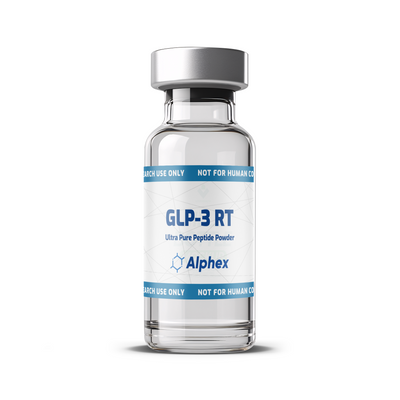 GLP-3 (RT)From£34.99
£49.99View product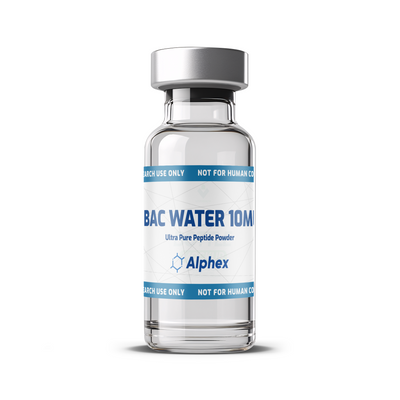 Bacteriostatic Water (0.9% Benzyl Alcohol)From£4.99
£11.49View product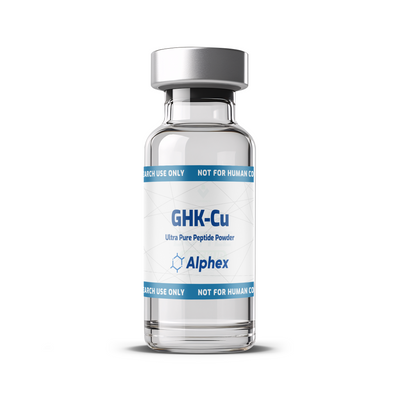 GHK-CuFrom£24.99
£37.49View product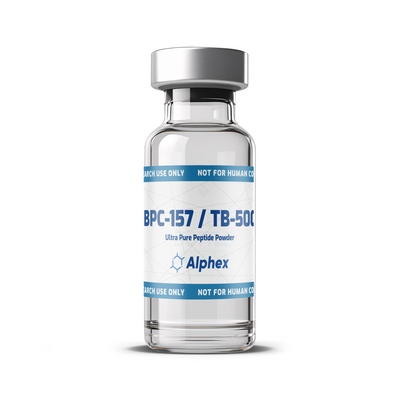 BPC-157 + TB-500 BlendFrom£69.99
£99.99View product GlutathioneFrom£34.99
£49.99View product MOTS-cFrom£74.99
£112.49View product TesamorelinFrom£59.99
£87.49View product TB-500From£34.99
£49.99View product IpamorelinFrom£29.99
£43.99View product
Be first in the queue when it's back.
Restocks are allocated in signup order. Leave your email and we'll notify you the moment BPC-157 is available again.
Reviews from UK researchers.
Researchers who leave a review receive 10% off their next order, whatever the rating. Reviews are collected and published through Judge.me.