

Bacteriostatic Water (0.9% Benzyl Alcohol)
Independently verified to specification
Pass on every assay
Benzyl alcohol content, pH and sterility, all within limits
Measured by USP <71>, HPLC-UV/VIS, USP <791> at Vanguard Laboratory on the exact batch we ship you, not a representative sample from a previous lot.
Vanguard Laboratory is accredited to ISO/IEC 17025:2017 by A2LA under certificate scope 6377.01. The chromatographic purity result shown is not represented as an accredited-scope test. The laboratory did not observe sample selection and cannot confirm the sample is representative of the whole lot.
Certificate of Analysis
Every batch is tested by Vanguard Laboratory for sterility, benzyl alcohol content and pH. The certificate is batch-matched to the vial label and published in our COA library, so you can read it before you order rather than asking for it.
Vanguard is accredited to ISO/IEC 17025:2017 by A2LA under certificate scope 6377.01. The chromatographic purity result is not represented as an accredited-scope test.
Shipping & delivery
Order by 2pm Mon-Fri for same-day dispatch. Sent with Royal Mail Tracked 24, which aims for the next working day. Vacuum-sealed, discreet packaging. £3.99 under £60, free over £60 after any discount.
Free delivery protection is included on every order. If your parcel is lost in transit or a vial arrives damaged, we replace it at no cost. See shipping and delivery.
Storage & handling
Lyophilised peptides ship vacuum-sealed. Refrigerate (2-8°C) on arrival for short-term storage, freeze (-20°C) for long-term.
Research use only
Supplied exclusively for laboratory and research purposes. Not authorised for human or veterinary use.
Bacteriostatic water is sterile water containing 0.9% w/v benzyl alcohol as a preservative. Alphex supplies it in a 10 mL multi-use vial from UK stock, as a laboratory diluent for reconstituting lyophilised research peptides into stocks that will be sampled more than once. Each lot is tested at an independent laboratory and the certificate is published in our public COA library.
For research purposes only. This product is supplied exclusively for scientific laboratory research and analytical applications. It is not intended for human or animal use, and must not be misused in any way that contravenes regulations or applicable laws.
What bacteriostatic water is
Bacteriostatic water has two components: water and benzyl alcohol at 0.9% weight per volume, which is 9 mg of benzyl alcohol in every mL. The benzyl alcohol is bacteriostatic. It inhibits the growth of bacteria introduced when a needle passes through the septum, so a vial can be sampled repeatedly over a period of weeks. It is not a sterilising agent. It will not sterilise a solution that is already contaminated, it does little against fungal contamination, and it does nothing to remove endotoxin.
That is the whole reason to choose it over plain sterile water. Sterile water without a preservative is effectively single use once the seal has been broken. Bacteriostatic water keeps a multi-sample peptide stock usable for longer, which suits the common laboratory pattern of reconstituting a vial once and drawing from it several times.
It is also distinct from saline (0.9% sodium chloride) and from buffered diluents. Saline adds ionic strength, which can change solubility. A buffer fixes the pH, which matters for many peptides. Bacteriostatic water does neither, so it is the neutral default for short, water-soluble peptides, and the wrong choice for a few specific situations covered below.
Specification
The specification table further down this page lists composition, CAS numbers, form and storage. In practical terms:
- Composition. Water with 0.9% w/v benzyl alcohol.
- Presentation. 10 mL multi-use glass vial with a puncturable rubber septum and crimp seal.
- Appearance. Clear and colourless, with no visible particles. Discard any vial that is cloudy or contains particles.
- Storage. 15-25 C, protected from light. Once the septum has been punctured, discard the vial 28 days later.
Choosing a diluent: bacteriostatic water, sterile water or buffer
Use bacteriostatic water when
You are reconstituting a peptide stock that will be kept refrigerated and sampled repeatedly over days to a few weeks. This is the usual case for short, water-soluble research peptides.
Use sterile water when
- The preparation is single use.
- The assay is sensitive to benzyl alcohol. At 0.9% the preservative is cytotoxic to many cell lines, and some enzyme assays are sensitive to alcohols.
- You are preparing an analytical sample. Benzyl alcohol absorbs strongly in the UV range and appears as a peak on reverse-phase HPLC, which can crowd the chromatogram at 220 nm.
Use a buffer when
pH control matters, which for many peptides it does. Some peptides are most stable or soluble in a defined pH range, and copper complexes such as GHK-Cu are sensitive to pH. A buffer can be made up in bacteriostatic water if a preservative is wanted, provided the components are compatible.
Handling in the lab
- Let the sealed peptide vial and the water reach room temperature before opening. A cold vial pulls condensation onto lyophilised powder.
- Swab both septa with alcohol and let them dry.
- Withdraw the required volume of bacteriostatic water through the septum with a sterile needle.
- Add it slowly down the inside wall of the peptide vial, not directly onto the powder.
- Let the vial stand. Most short peptides dissolve within a minute or two. Swirl gently if needed. Do not shake or vortex, because foaming can denature peptides.
- Check that the solution is clear. Cloudiness or particles point to a solubility or aggregation problem.
- Label the vial with the compound, nominal concentration, date and batch number, and store it at 2-8 C in the dark.
Write the first-puncture date on the bacteriostatic water vial as well. The 28-day convention applies to the water, regardless of how much is left. Each puncture is a contamination risk, and benzyl alcohol can partition into the rubber septum over time, which lowers its concentration in the liquid. The peptide stock you make has its own useful life, which is set by the stability of the peptide and is often shorter than 28 days.
Reconstitution arithmetic
When bacteriostatic water is used as a diluent, the concentration of the resulting stock is set by the volume you add:
Concentration (mg/mL) = peptide mass in the vial (mg) / volume of diluent added (mL)
| Vial fill | Diluent added | Nominal stock concentration |
|---|---|---|
| 5 mg | 1 mL | 5 mg/mL |
| 5 mg | 2 mL | 2.5 mg/mL |
| 10 mg | 2 mL | 5 mg/mL |
| 50 mg | 5 mL | 10 mg/mL |
| 100 mg | 5 mL | 20 mg/mL |
To make a working solution from a stock, use C1 x V1 = C2 x V2. For example, to prepare 1 mL of a 100 µg/mL working solution from a 5 mg/mL stock: V1 = (0.1 mg/mL x 1 mL) / 5 mg/mL = 0.02 mL, so 20 µL of stock made up to 1 mL with the assay buffer.
The same arithmetic tells you how much benzyl alcohol carries over into the working solution. In the example above, 20 µL of a stock made in 0.9% bacteriostatic water, diluted to 1 mL, leaves about 0.018% benzyl alcohol. Calculate this for every cell-based assay rather than assuming it is negligible.
Two cautions. First, these are nominal concentrations based on the vial fill, not on net peptide content. Second, to convert to a molar concentration, divide by the molecular weight of the compound: 10 mg/mL of a 403.9 g/mol peptide is about 24.8 mM. Our note on calculating peptide concentration works through more examples.
Common mistakes with bacteriostatic water
- Treating it as sterile forever. The preservative slows bacterial growth; it does not make a punctured vial sterile indefinitely. Date the vial at first puncture and keep to 28 days.
- Using it for everything. It is the wrong diluent for preservative-sensitive cell assays and for HPLC samples. Keep a supply of sterile water or buffer for those.
- Refrigerating the unopened vial. Unopened bacteriostatic water is stored at room temperature, 15-25 C. Refrigeration is for the peptide stock you make with it.
- Squirting it onto the powder. A fast jet onto a lyophilised cake causes foaming and can leave material on the stopper. Run it down the vial wall.
- Forgetting the carry-over. Benzyl alcohol travels with every dilution. Work out the final concentration in the assay rather than assuming it is negligible.
- Losing the lot number. Record the bacteriostatic water lot alongside the peptide batch in your lab notebook, so any later question about a stock can be traced to both certificates.
What to check when buying bacteriostatic water
Bacteriostatic water is sold widely and labelled inconsistently. Some products are unpreserved sterile water described as bacteriostatic, some do not state the benzyl alcohol content, and some carry no lot number at all. Before you buy from anyone, check for a stated 0.9% benzyl alcohol content, a sealed multi-use vial with a septum, a lot number on the vial, and a published test result for that lot. Buying from UK stock also means the vial arrives quickly and in date, and Alphex lists it alongside the peptides so that the diluent arrives in the same parcel.
How the batch certificate works
Alphex sends each lot of bacteriostatic water to Vanguard Laboratory, an independent analytical laboratory. For the current lot, 0011 (vial label #0011-BAC), the library holds two certificates:
- Benzyl alcohol content and pH, reported 7 September 2026. Benzyl alcohol was measured at 0.88% by HPLC-UV/VIS, inside the 0.72 to 1.08% limit. pH was 6.93 by USP <791>, inside the 4.0 to 7.0 limit.
- Sterility, reported 19 October 2026. The lot passed the USP <71> sterility test, negative for growth.
The previous lot, 0010, stays in the library marked superseded. Vanguard is accredited to ISO/IEC 17025:2017 by A2LA under certificate 6377.01. The chromatographic result is not represented as an accredited-scope test.
To check your vial, open the COA library and type in the batch code printed on the label. The certificates do not report an endotoxin result, and Alphex does not claim one.
Vial size and reconstitutions
| Vial | Volume used per reconstitution | Reconstitutions per vial |
|---|---|---|
| Bacteriostatic water 10 mL | 2 mL | Up to 5 |
| Bacteriostatic water 10 mL | 5 mL | Up to 2 |
In practice you will get slightly less than the full 10 mL out of a vial because of dead volume in the septum and needle. Plan around the 28-day discard rule as well: whatever is left 28 days after first puncture is discarded, however much remains.
Frequently asked questions
Does bacteriostatic water sterilise a contaminated solution?
No. Benzyl alcohol inhibits the growth of bacteria introduced during sampling. It does not kill an existing contamination and it does not remove endotoxin.
Why discard it 28 days after first puncture?
It is the accepted convention for preserved multi-use diluents. It balances the preservative's effect against the contamination risk that builds up with each puncture, and the slow loss of benzyl alcohol into the septum.
Can I use it for cell-culture work?
Only if the final benzyl alcohol concentration in the culture is low enough for your cell line. At 0.9% it is cytotoxic to many lines. Use the dilution arithmetic above to work out the carry-over, or reconstitute in sterile water or buffer instead.
Can I use it to prepare HPLC samples?
It is better not to. Benzyl alcohol gives a strong peak on reverse-phase HPLC with UV detection. Prepare analytical samples in water or mobile phase, or account for the peak in the integration.
Is it suitable for every peptide?
It suits most short, water-soluble peptides. Peptides that need a defined pH, very hydrophobic sequences and some lipidated peptides may dissolve better in a buffer or a co-solvent. Our note on sterile water, bacteriostatic water and saline compares the options.
Further reading
- Bacteriostatic water for peptide reconstitution: when to use it and how
- Benzyl alcohol in bacteriostatic water, explained
- Sterile water, bacteriostatic water or saline?
- How to calculate peptide concentration: mg/mL and molar
Alphex bacteriostatic water is supplied to laboratories and researchers as a reagent for reconstituting research peptides, for in-vitro use only. Delivery is UK only, by Royal Mail Tracked 24, which aims for the next working day.
Bacteriostatic Water (0.9% Benzyl Alcohol) specification
| Compound class | Laboratory reagent for peptide reconstitution |
|---|---|
| Sequence | Not applicable (reagent) |
| Molecular formula | H2O with 0.9% w/v benzyl alcohol |
| Molecular weight | Not applicable |
| CAS number | 7732-18-5 (water); 100-51-6 (benzyl alcohol) |
| Also known as | BAC water, bacteriostatic water for reconstitution |
| Form | Sterile aqueous solution, multi-use vial |
| Testing | Sterile, 0.9% benzyl alcohol preservative. Sterility, benzyl alcohol content and pH tested per batch |
| Available sizes | 10ml |
| Storage | Store at 15-25 C. Discard 28 days after first puncture. |
| Documentation | Batch-matched Certificate of Analysis with the HPLC chromatogram, the measured purity and the issuing laboratory named. Published in the public COA library, searchable by the batch code printed on the vial label. |
| Origin and dispatch | UK domestic stock, UK addresses only. Same-day dispatch before 2pm Mon-Fri, sent with Royal Mail Tracked 24, which aims for the next working day after dispatch. |
| Intended use | Laboratory and in-vitro research only. Not authorised for human or veterinary use. |
Values are typical for the compound. The Certificate of Analysis for the shipped batch is the authoritative record of what that batch was tested for and the result.
Other research peptides from our UK stock:
 GLP-3 (RT)From£34.99
£49.99View product GHK-CuFrom£24.99
£37.49View product BPC-157From£14.99
£24.99View product BPC-157 + TB-500 BlendFrom£69.99
£99.99View product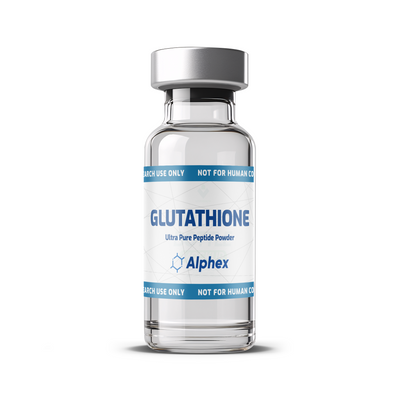 GlutathioneFrom£34.99
£49.99View product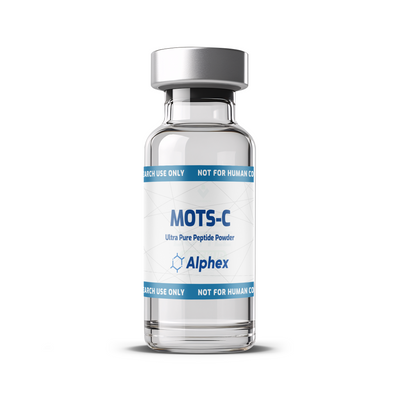 MOTS-cFrom£74.99
£112.49View product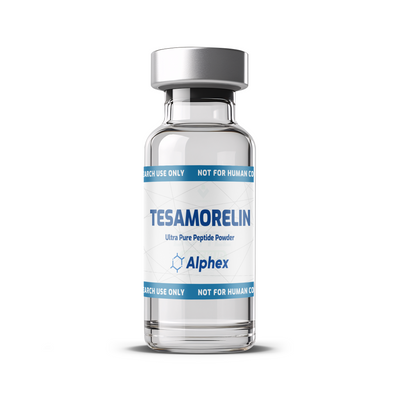 TesamorelinFrom£59.99
£87.49View product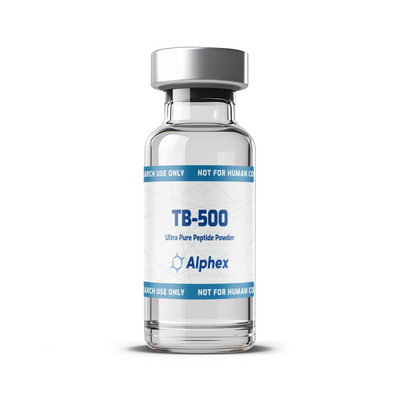 TB-500From£34.99
£49.99View product IpamorelinFrom£29.99
£43.99View product
Be first in the queue when it's back.
Restocks are allocated in signup order. Leave your email and we'll notify you the moment Bacteriostatic Water (0.9% Benzyl Alcohol) is available again.